The Politics of Preservation: Why 'Official Records' Aren't Neutral
How power, selection, and access shape what we come to call history, and why “archival silence” matters.1
The comforting myth of neutrality
We’re taught to trust records stamped with seals: the birth certificate, the court docket, the city plan, the board minutes. These documents feel impartial, but records don’t fall into folders by gravity. People and policies decide what to collect, how to catalog it, and who gets to look. Even formats and file names carry assumptions about whose lives matter.
The archives is a place of knowledge, memory, nourishment, and power.2
Archives are sites of power
Historian-archivist Randall C. Jimerson uses three lenses—the temple, the prison, and the restaurant—to show how archives legitimize, control, and interpret memory. In short, archives select, preserve, and provide access; those choices shape public truth. 2
- Temple: Authority and veneration. Preservation “sanctifies,” conferring prestige and credibility. 2
- Prison: Control and exclusion. Gatekeeping by law, policy, or resources decides who enters and which records remain sealed. 2
- Restaurant: Interpretation and taste. Description, finding aids, and metadata are the menu; they frame how we discover and understand the “meal.” 2
These aren’t insults; they’re reminders that archival work is consequential and never purely technical.
Enter the problem of archival silence
Archival silence is the absence or distortion of records that erases people, events, or phenomena from view. Silences don’t just “happen”; they’re produced by systems, resources, and choices. 3 4
Archival silence: a gap in the historical record resulting from the unintentional or purposeful absence or distortion of documentation.3
How silences happen
- Bureaucratic visibility favors the powerful. Governments and corporations generate thick paper (and digital) trails. Grassroots groups and everyday lives leave thinner traces. 4
- Documentation follows resources. Preservation takes money, space, and staff. Communities without those resources are under-documented or documented by outsiders. 4
- Description encodes perspective. The same record can be cataloged to highlight a mayor’s “revitalization” or a neighborhood’s displacement. Metadata guides discovery; biased metadata hides people. 2
- Access isn’t equal. “Open” records can be practically closed if they’re paywalled, poorly digitized, or only available 9-5 in a downtown reading room. 2 4
Why “official” doesn’t mean “truer”
When something is stamped official, we often grant it extra epistemic weight as if it’s more reliable than oral histories or community archives. That shortcut can mislead.
- Records serve administrative needs first. A birth certificate captures legal identity, not family dynamics. A zoning map reflects planning priorities, not neighborhood well-being.
- Silences are structural, not accidental. Gaps often reflect censorship, surveillance, or neglect. Absence is data; it signals power at work. 4 5
- Objectivity is curated. Retention schedules, privacy laws, and “keep this/weed that” policies tilt the field. 2
Read records like a historian (without being one)
You don’t need a PhD to interrogate a source. Try this:
- Provenance: Who created this, and to solve what problem?
- Selection: What else could have been recorded but wasn’t—and who pays the price for that omission?
- Description: Which keywords, categories, or subject headings are doing quiet ideological work?
- Access: Who can view this easily, and who can’t? What hoops exist?
- Correlation: What would a community archive, oral history, newspaper, map, or photograph say alongside this “official” document?
The archive confers legitimacy on some narratives while excluding others.5
The digital twist: speed, scale, fragility
Digital abundance can hide digital precarity. Bit rot, platform churn, and proprietary formats threaten long-term access. Algorithms decide discoverability; unindexed content may as well not exist. The politics of selection, preservation, and access still apply—only faster and often invisibly. 2
Toward fairer memory: practical moves
For institutions and platforms (including us):
- Diversify intake. Build relationships to collect records from communities historically overlooked. 4 5
- Document decisions. Publish collection policies, retention rules, and deaccession rationales in plain language. 2
- Center description ethics. Use community-preferred names and terms; expose subjectivity in finding aids. 3 4
- Lower the gates. Reduce access barriers: thoughtful digitization, better search, community-friendly hours. 2
- Invite annotation. Treat catalogs as living documents. Let communities add context, correct errors, and surface missing threads. 4 5
For readers, researchers, and family historians:
- Treat the archive as a powerful witness, not an infallible judge.
- Pair “official” documents with community memory and personal ephemera.
- Keep a bias log: whose voices dominate your sources so far? Who’s missing?
- When you encounter a silence, write it down! Silence is evidence of power at work.
Re-balancing the record
If archives are temples, prisons, and restaurants, the goal isn’t to bulldoze them; it’s to redesign them with more doors, more tables, and transparent kitchens. Neutrality isn’t the destination; accountable stewardship is. The past we inherit, and the futures we can imagine, depend on it.
There’s no such thing as a neutral archive. What gets kept, how it’s described, and who can see it are all human choices tied to power. Treat “official records” as one perspective among many, and actively look for the voices that were never recorded or were filed where no one would look.
Join The Conversation!
Join our email list for updates and insights on family history preservation.
Free early access • No credit card required
Footnotes
-
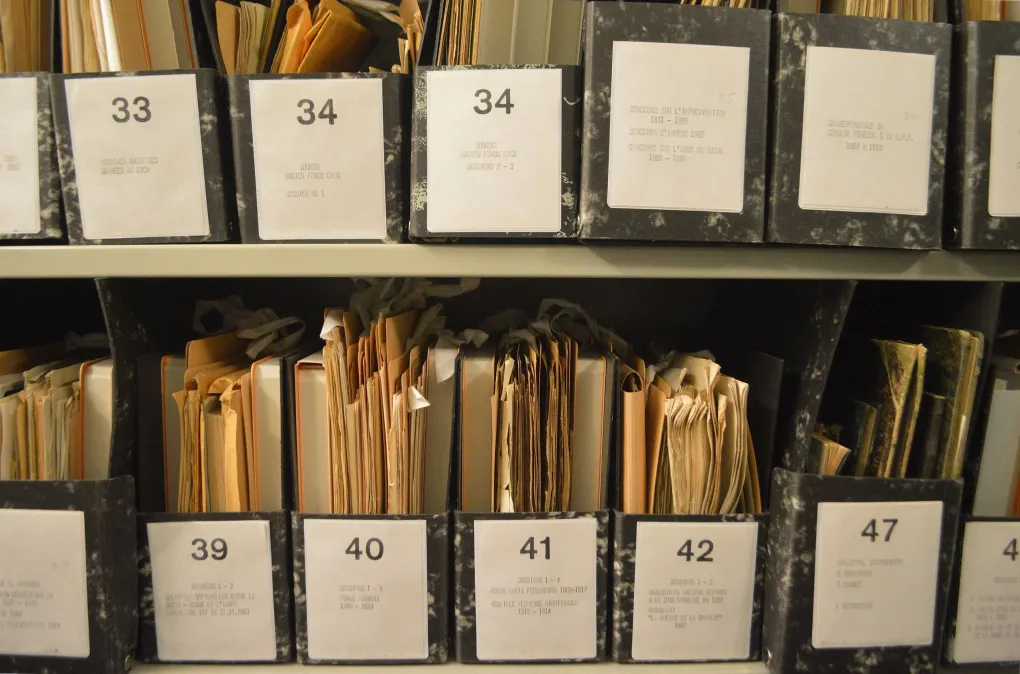
Header image: First ICRC records, ICRC Archives, Roman Deckert, 09/06/2020 CC-BY-SA-4.0 ↩
-
Randall C. Jimerson, “Embracing the Power of Archives,” presidential address (Society of American Archivists), Aug. 18, 2005. https://www2.archivists.org/history/leaders/randall-c-jimerson/embracing-the-power-of-archives ↩ ↩2 ↩3 ↩4 ↩5 ↩6 ↩7 ↩8 ↩9 ↩10 ↩11
-
Dictionary of Archives Terminology Editorial Team (Society of American Archivists), “Archival silence.” https://dictionary.archivists.org/entry/archival-silence.html ↩ ↩2 ↩3
-
Kaitlin Smith, “The Problem of Archival Silences,” Facing History & Ourselves, Oct. 25, 2021. https://www.facinghistory.org/ideas-week/problem-archival-silences ↩ ↩2 ↩3 ↩4 ↩5 ↩6 ↩7 ↩8
-
Angela Mathew, “The Archive as Authority: Power, Exclusion, and Historical Production,” Historically Speaking SSC, Jan. 30, 2025. https://historicallyspeakingssc.wordpress.com/2025/01/30/the-archive-as-authority-power-exclusion-and-historical-production/ ↩ ↩2 ↩3 ↩4
